


Scope, partnerships and barrier to growth.
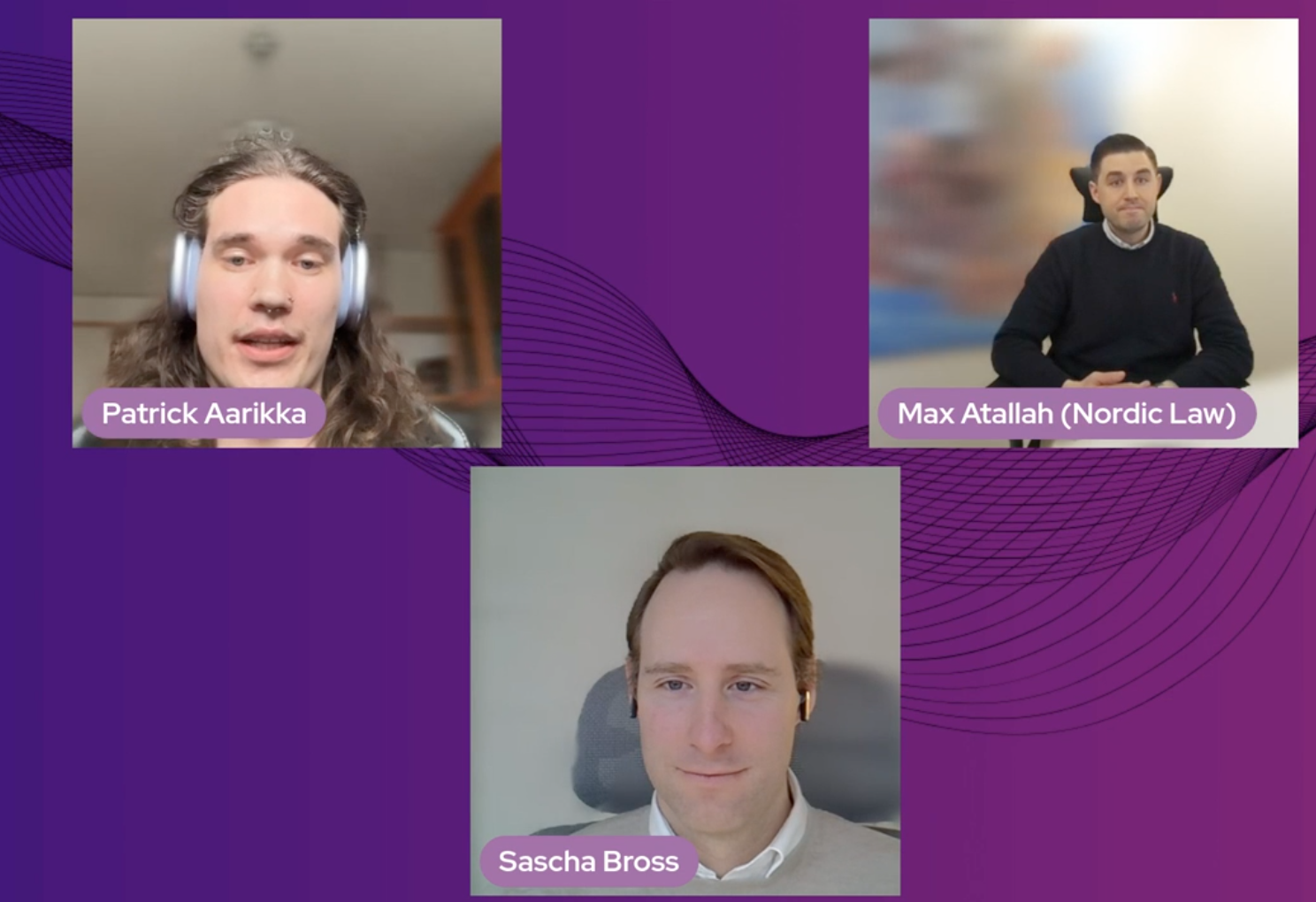
Those were some of the words that arose yesterday when three of the leading voices of the Finnish crypto ecosystem, Max Atallah (Managing Partner at Nordic Law), Patrick Aarikka (Chief Compliance Officer at Cairns Point), and Sasha Broos (Managing Director at Ivy) sat down to discuss EMTs and the regulatory interplay with MiCA and PSD2.
Here are some key highlights from the session that toke place during Nordic Crypto Adoption Week 2026:
Patrick: Scope is very important. What are you building? Are you building a crypto stablecoin payments company or something related to that? Or are you building a more comprehensive suite of financial services? If you are building financial services inside a larger framework or scope, you probably need the PSD authorization. If you are building something that only requires inbound and outbound stablecoin transactions or settling something in stablecoins, you probably don't want to build all the infrastructure that comes with the PSD2 license. So it requires thorough thinking on what you are building and when you are going to need the licenses.
Max: In my opinion, it's dependent on the business goals of the company that operates with EMTs. If you plan on essentially using EMTs as payments, then it makes sense for you to have both licenses yourself. If you just intend to operate as, for example, a crypto asset service provider - essentially acting as a broker - then there's no need for you to have both licenses unless it actually benefits your business. If that is the case, it could be the wisest to just use a partner in that situation. I see cases where a crypto company would access a market by using a partnership. And then once the business comes more mature, then they would apply for the dual license.
Sascha: MiCA is a tough regulation. It has very concrete timelines where you get the CASP or you don't. But a PSP can take you 12 or even 15 months to get in some jurisdictions. So if you need both of them, you can’t even go to market. So from a startup perspective, MICA acts as a huge filter. And dual licensing makes it completely unattractive for any investors and any startup. You have two capital requirements, two programs of operations. You have a lot of resource allocation. You have a lot of risk management. And not just in the company, also towards regulators, the FSAs, etc. It's also two teams, that need two different supervisors. And at the end of the day, it's going to be a bit messy and a huge strain.
Thank you to Max Atallah, Patrick Aarikka, and Sascha Bross for sharing their insights and experiences.
You can watch the full conversation here - the regulatory discussion starts at 1h 37min.
Max and Patrick are Co-Country Leads for Finland in Nordic Blockchain Association’s Legal and Advocacy Steering Committee. To read more about the Steering Committees, their members, and the work they do for the Nordic crypto and blockchain industry, read more here.